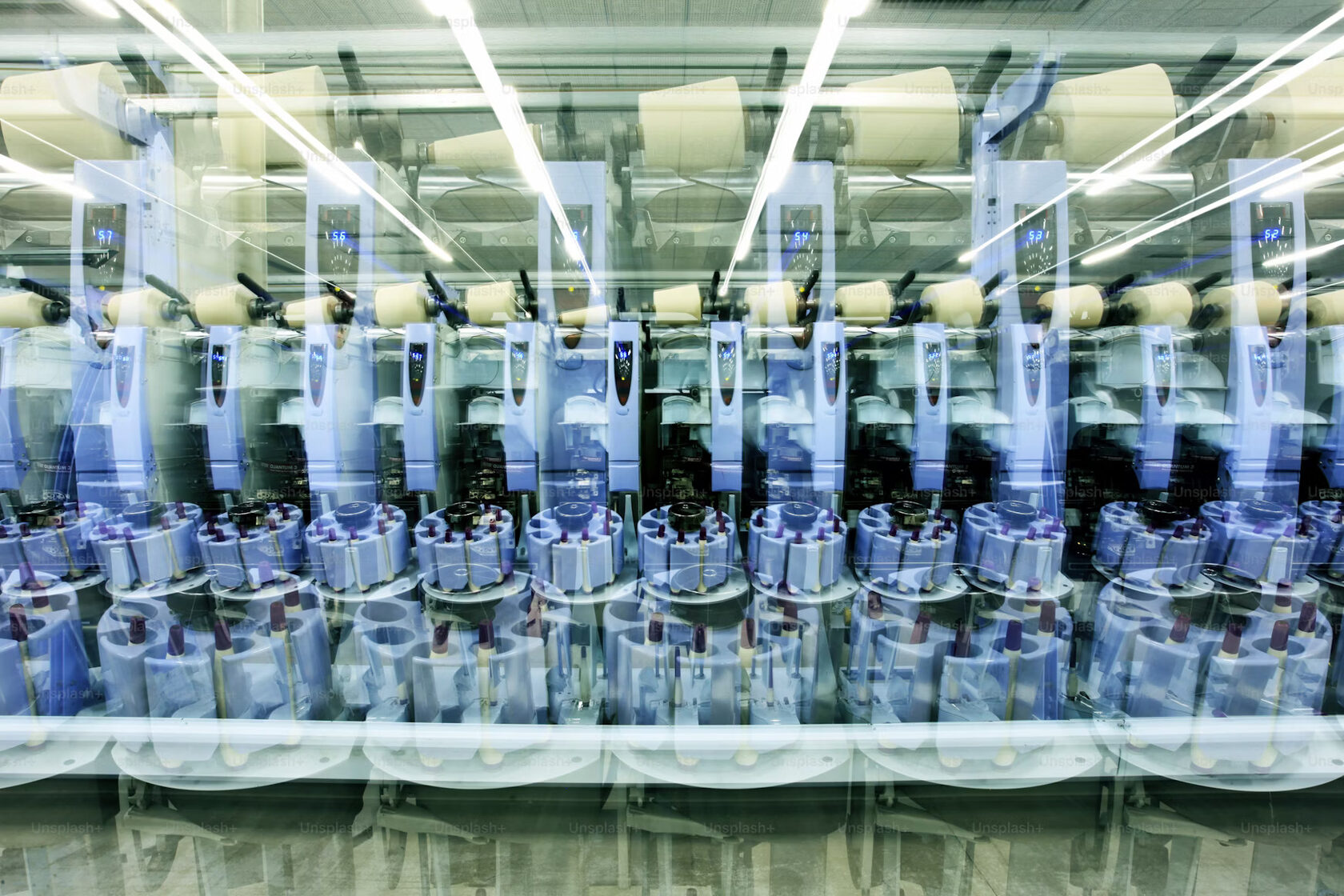
The Internet of Things (IoT) and Machine Learning (AI/ML) are technologies already transforming industry. Smart manufacturing is no longer just a buzzword — it’s a new reality where equipment sensors, networks, and advanced algorithms work together to optimize production processes, predict equipment failures, improve product quality, and minimize costs.
However, successful implementation of IoT and AI/ML requires not only investment in technology but also overcoming serious challenges related to each factory’s unique characteristics, handling large volumes of data, integrating different systems, and training personnel.
A New Industrial Era: Marketing vs. Manufacturing
Modern companies are realizing that marketing strategies alone no longer provide a sustainable competitive edge. As organizations adopt the same methods, advertising campaigns lose effectiveness, forcing businesses to seek new ways to boost efficiency and reduce costs.
In practice, this looks like manufacturers running similar promotional campaigns year after year. As a result, the market reaches equilibrium: campaigns don’t overlap, and each player earns its share of profit. In such a situation, standard approaches stop providing an advantage — innovation becomes the only way forward.
Another issue is the gap between marketing and production. While marketing drives demand, manufacturing often struggles to keep up, leading to shortages, poor quality, delivery delays, and ultimately dissatisfied customers.
Smart Manufacturing as the Key to Competitiveness
The “smart manufacturing” concept, based on integrating IoT systems and AI/ML algorithms with enterprise management systems, offers several opportunities:
The true value lies in creating a closed feedback loop between production and external demand.
The solution is not only synchronizing marketing efforts with production capabilities but also transforming manufacturing itself using IoT and AI/ML technologies. Sensor deployment, process automation, real-time data analysis, and predictive maintenance create adaptive, efficient factories that can respond quickly to demand fluctuations, maintain high quality, and minimize costs.
These technologies provide transparency across production, optimize supply chains and inventory according to demand, and enable rapid reconfiguration of manufacturing lines. Thanks to “smart manufacturing,” companies can not only meet marketing-driven demand efficiently but also use production data to refine marketing strategies — forming a continuous cycle of improvement.
The key idea, as mentioned earlier, is that marketing cannot promote a product that doesn’t exist yet. Before pouring money into sales, companies must ensure the production process delivers a market-relevant product that outperforms competitors while minimizing production costs. Ultimately, the “smart manufacturing” approach treats all data as a unified foundation for decision-making — from marketing and sales to production.
When Smart Manufacturing Becomes Useless
The main mistake executives make is believing in “out-of-the-box” solutions. Every enterprise is unique — with its own processes, equipment, materials, products, customers, and management culture.
Every process is unique information, and data is a reflection of each factory’s individuality. It’s important to understand: there is no universal ready-made solution for creating a “smart manufacturing” system.
Success requires deep process analysis and iterative implementation of tools for learning from new data. This leads to the realization that the foundation of the system is not a single technology but a combination of many tools. Yet, in the pursuit of quick results, managers often make the following mistakes:
Checklist: How to Implement Smart Manufacturing Properly
Before adopting smart manufacturing, a thorough analysis of existing processes, problems, and opportunities is essential.
Define goals and objectives.
The first step is to justify the need and feasibility of implementation, formulate clear goals, and specify the tasks the solution must perform.
However, successful implementation of IoT and AI/ML requires not only investment in technology but also overcoming serious challenges related to each factory’s unique characteristics, handling large volumes of data, integrating different systems, and training personnel.
A New Industrial Era: Marketing vs. Manufacturing
Modern companies are realizing that marketing strategies alone no longer provide a sustainable competitive edge. As organizations adopt the same methods, advertising campaigns lose effectiveness, forcing businesses to seek new ways to boost efficiency and reduce costs.
In practice, this looks like manufacturers running similar promotional campaigns year after year. As a result, the market reaches equilibrium: campaigns don’t overlap, and each player earns its share of profit. In such a situation, standard approaches stop providing an advantage — innovation becomes the only way forward.
Another issue is the gap between marketing and production. While marketing drives demand, manufacturing often struggles to keep up, leading to shortages, poor quality, delivery delays, and ultimately dissatisfied customers.
Smart Manufacturing as the Key to Competitiveness
The “smart manufacturing” concept, based on integrating IoT systems and AI/ML algorithms with enterprise management systems, offers several opportunities:
- Monitoring and controlling production processes;
- Reducing resource consumption and improving product quality through comprehensive digitalization;
- Using equipment sensors to collect, analyze, and apply data for AI/ML-based intelligent monitoring.
The true value lies in creating a closed feedback loop between production and external demand.
The solution is not only synchronizing marketing efforts with production capabilities but also transforming manufacturing itself using IoT and AI/ML technologies. Sensor deployment, process automation, real-time data analysis, and predictive maintenance create adaptive, efficient factories that can respond quickly to demand fluctuations, maintain high quality, and minimize costs.
These technologies provide transparency across production, optimize supply chains and inventory according to demand, and enable rapid reconfiguration of manufacturing lines. Thanks to “smart manufacturing,” companies can not only meet marketing-driven demand efficiently but also use production data to refine marketing strategies — forming a continuous cycle of improvement.
The key idea, as mentioned earlier, is that marketing cannot promote a product that doesn’t exist yet. Before pouring money into sales, companies must ensure the production process delivers a market-relevant product that outperforms competitors while minimizing production costs. Ultimately, the “smart manufacturing” approach treats all data as a unified foundation for decision-making — from marketing and sales to production.
When Smart Manufacturing Becomes Useless
The main mistake executives make is believing in “out-of-the-box” solutions. Every enterprise is unique — with its own processes, equipment, materials, products, customers, and management culture.
Every process is unique information, and data is a reflection of each factory’s individuality. It’s important to understand: there is no universal ready-made solution for creating a “smart manufacturing” system.
Success requires deep process analysis and iterative implementation of tools for learning from new data. This leads to the realization that the foundation of the system is not a single technology but a combination of many tools. Yet, in the pursuit of quick results, managers often make the following mistakes:
- Buying expensive equipment or software that’s underused or doesn’t meet the company’s real needs;
- Creating isolated “automation islands” that don’t communicate with each other — making it impossible to measure effectiveness or justify further development;
- Automating inefficient processes instead of optimizing or redesigning them first — essentially digitizing old problems;
- Implementing “smart” systems without monitoring or KPIs to measure progress and identify weak spots, making it impossible to evaluate outcomes or justify continued investment.
Checklist: How to Implement Smart Manufacturing Properly
Before adopting smart manufacturing, a thorough analysis of existing processes, problems, and opportunities is essential.
Define goals and objectives.
The first step is to justify the need and feasibility of implementation, formulate clear goals, and specify the tasks the solution must perform.
Process analysis.
This helps understand the full business process and identify root causes of issues — whether outdated equipment, lack of staff qualification, poor workflow organization, or inefficient task sequencing. Many problems can already be resolved at this stage.
This helps understand the full business process and identify root causes of issues — whether outdated equipment, lack of staff qualification, poor workflow organization, or inefficient task sequencing. Many problems can already be resolved at this stage.
Financial and economic justification.
Develop a general concept and a high-level roadmap for implementation. This includes identifying what business needs the system should address and creating metrics to evaluate costs and benefits.
Focus on the most financially critical processes for piloting — applying the Pareto principle: 20% of efforts yield 80% of results. Sometimes the remaining 80% of processes don’t need sensor coverage if the ROI isn’t justified.
A well-prepared financial justification helps avoid costly mistakes since equipping production with sensors is expensive and must be grounded in measurable benefits. The output of this stage should be a roadmap and a clear evaluation framework.
Develop a general concept and a high-level roadmap for implementation. This includes identifying what business needs the system should address and creating metrics to evaluate costs and benefits.
Focus on the most financially critical processes for piloting — applying the Pareto principle: 20% of efforts yield 80% of results. Sometimes the remaining 80% of processes don’t need sensor coverage if the ROI isn’t justified.
A well-prepared financial justification helps avoid costly mistakes since equipping production with sensors is expensive and must be grounded in measurable benefits. The output of this stage should be a roadmap and a clear evaluation framework.
Implementation of the “smart” solution.
Only at this stage should deployment begin, broken into sub-stages to evaluate efficiency after each iteration. Detailed development and rollout require ongoing assessment and are beyond the scope of this article, as they deserve separate, in-depth discussion.
Conclusion
Implementing smart manufacturing is not an endpoint solved by purchasing a ready-made system — it’s the start of a continuous journey of monitoring, evaluation, and improvement. Constantly analyzing current results helps identify new opportunities for optimization and automation, enabling companies to adapt to changing conditions and evolving markets.
Only at this stage should deployment begin, broken into sub-stages to evaluate efficiency after each iteration. Detailed development and rollout require ongoing assessment and are beyond the scope of this article, as they deserve separate, in-depth discussion.
Conclusion
Implementing smart manufacturing is not an endpoint solved by purchasing a ready-made system — it’s the start of a continuous journey of monitoring, evaluation, and improvement. Constantly analyzing current results helps identify new opportunities for optimization and automation, enabling companies to adapt to changing conditions and evolving markets.